The Destination
Kythera · the island that asks you
to stay a little longer
Kythera is one of those islands you don’t accidentally pass through. You choose it.
Tucked between the Peloponnese and Crete, it is stitched together by ravines, old stone bridges, monasteries, small vineyards and all types of beaches; wide sandy bays, tiny coves, pebbled inlets only locals talk about.
Spring and autumn are made for walkers, readers and remote workers;
summer adds long, salt‑heavy days. There is plenty “to do”,
but the real luxury lies in how much you don’t have to.

Sea and coves
Kythera’s coastline is a quiet study in contrasts: long, open beaches where the horizon seems to stretch forever, and small, hidden coves that reveal themselves only at the end of dusty tracks. Paleopoli, with its wide arc of sand and history, feels spacious and generous, while Avlemonas gathers life around a luminous blue inlet of rocks, ladders and whitewashed paths. Elsewhere, pebbled bays lie below cliffs and small chapels look out over water. The sea is rarely loud here; it invites you to slip in, float for a while, and let the day find its own pace.
Villages and everyday life
Kythera’s villages are not stage sets; they are places where people still shop, gossip and watch the weather. Chora, with its castle and narrow alleys, is best met at a walking pace, when the light softens and doorways glow. In Avlemonas and Kapsali, life leans towards the sea; in inland villages, squares and cafés pull people together in the evenings. You might pass a bakery where the smell of bread spills onto the street, or a kafenio where one coffee seems to last an entire afternoon. The island’s charm often lies in these small, unhurried scenes.

Nature, walking
and quiet exploration
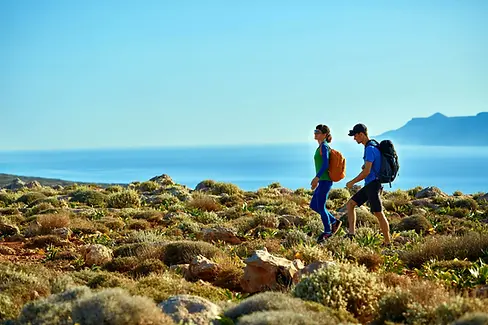
Beyond the shoreline, Kythera is all ravines, plateaus and paths that seem to remember older ways of moving. Walks lead past stone bridges, abandoned watermills, small waterfalls and chapels tucked into the landscape. In spring, the island smells of herbs and damp earth; in autumn, the air cools and colours deepen. Distances are rarely long, but the sense of being away from noise is immediate. You don’t need to be a serious hiker to wander here—comfortable shoes, time and curiosity are usually enough. Often, the reward at the end is not a viewpoint, but a silence you didn’t know you missed.
History, stories
and small discoveries
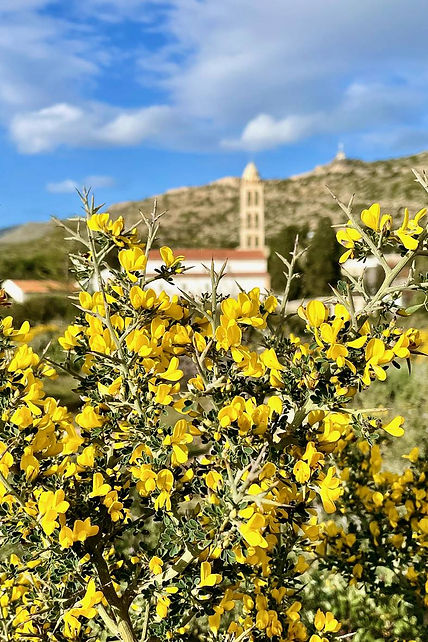
Kythera’s history is not presented in grand gestures; it appears in fragments. A Venetian castle watching over Chora and Kapsali. A chapel balanced on a rock above the sea. A lighthouse or a ruined settlement glimpsed from the road.
Myths and stories linger in place names and local tales, but there is no pressure to “see everything”. You might visit one archaeological site, step into a monastery’s courtyard, or simply pause in a tiny church that happens to be open. The feeling is less of ticking off monuments and more of overhearing a long conversation between land, sea and people.

Time, seasons
and the art of staying
Kythera changes quietly with the seasons. In July and August, days stretch around swims, late dinners and warm night air.
In April, May, September and October, the island slows further: ideal months for reading on a terrace, working remotely with the sound of cicadas, or exploring without heat or crowds. Many visitors find themselves slipping into a gentler rhythm—waking with the light, planning only one thing a day, letting conversations run long.
It’s an island that rewards those who don’t rush it, and that often sends people home with fewer photos than memories.